How Vault Curators Buy Distribution With Incentives
Kraken's earn tab runs on a Sentora vault. Robinhood's runs on Steakhouse. Coinbase's USDC lending runs on Steakhouse too, through Morpho. Each of those front ends picked one curator, and 146 others did not get the slot.
That is the distribution problem a curator has. Not depositors. Front ends.
The rate does not win the slot
Two curators on the same lending market land within a few basis points of each other. The front end compares risk, track record and rate, and on a mature market the rate is the least different of the three.
Trading Strategy tracks 147 curators running $20.5B in stablecoin vaults as of August 2026. The top three hold about 40%. The rest compete for the same handful of exchanges, wallets, neobanks and payroll apps that put a vault in front of millions of users. The front end can swap the vault underneath without its users noticing. Loyalty is not part of the product.
What a curator can offer that the rate cannot
A reward layer the front end runs under its own brand, funded by the curator.
A boost in USDC on the first deposit.
A higher rate for a balance held past 90 days.
A reward for the user who invited three others who also deposited.
The front end gets a growth program it did not have to fund or build. The curator gets a reason to be picked that has nothing to do with basis points, and depositors who stay because leaving costs them the layer.
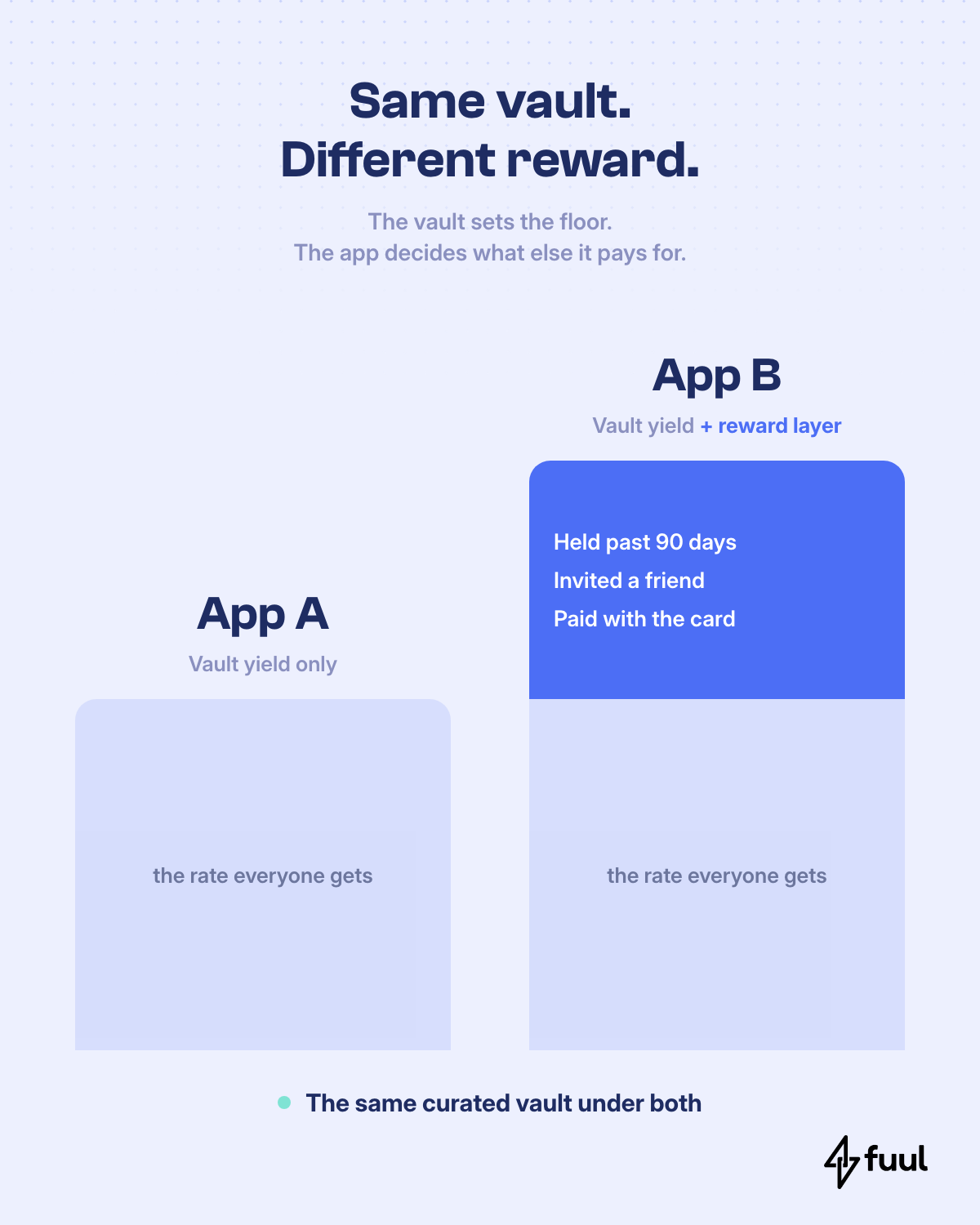
Same vault underneath. The front end on the right has a program. The one on the left has a rate.
One vault, one deal per front end
A curator does not sign one distributor. The exchange wants retention on a large book. The neobank that launched last month wants deposits. The wallet has a sponsor willing to co-fund in its own token.
Each deal gets its own rate, its own currency and its own budget, all paid on top of the same vault yield.
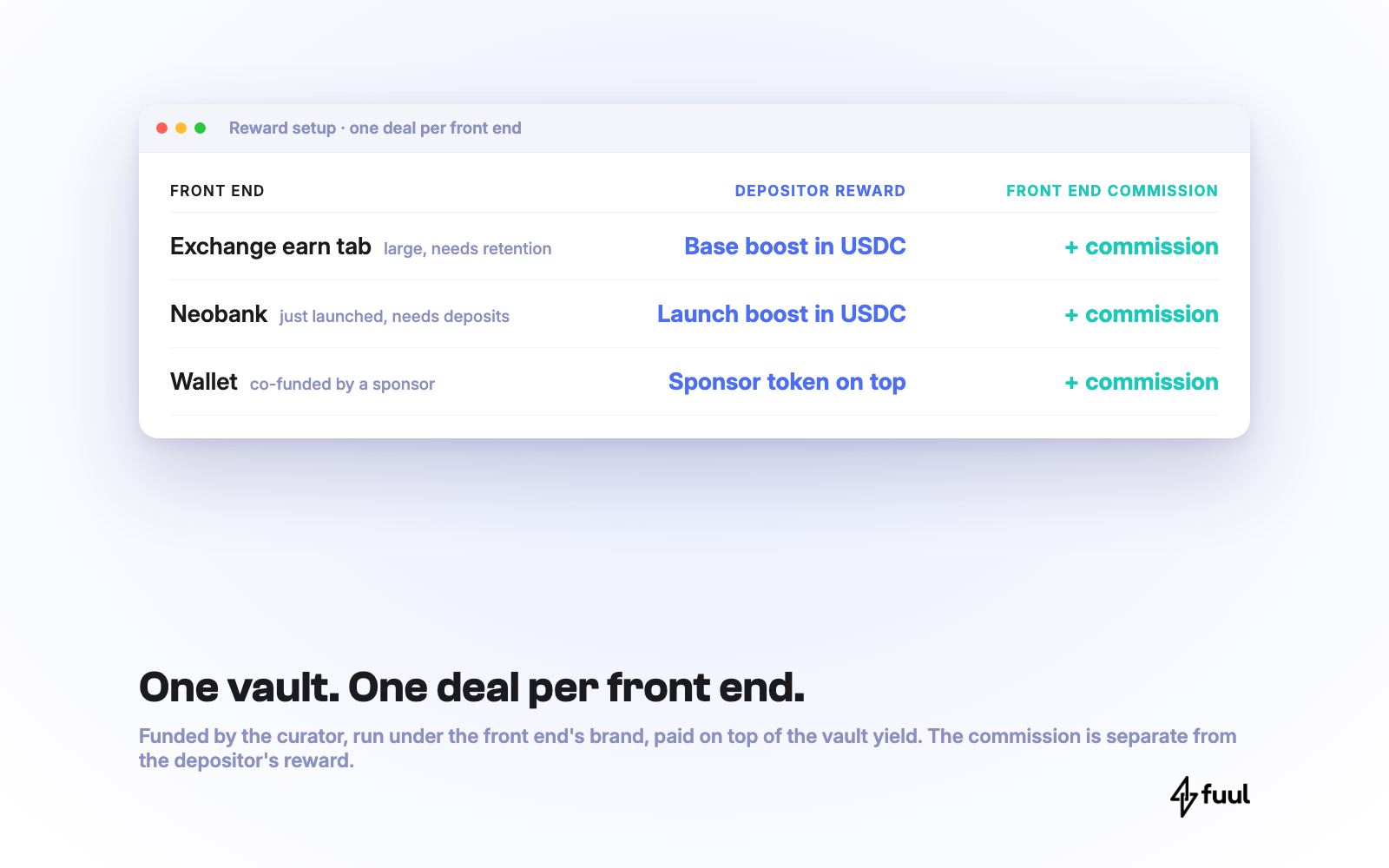
Nothing here changes the vault. The yield stays what the market pays. The layer is where the curator spends, and where it differs from the curator next door.
Pay the front end on its own line
The front end is the partner that routed the deposit. Pay it a commission per deposit or per dollar retained, in the same stablecoin, on a line separate from the depositor's reward.
Two things follow. The depositor's boost does not shrink when the commission is paid. And the curator knows what each front end cost, which is the number that decides whether to renew the deal.
What Fuul does
Fuul reads the balance in the vault and the events around it, applies the rules per front end and per audience, and pays the reward in stablecoins or tokens on top of whatever the vault already yields. A new front end is a new set of triggers with its own rate and budget, not a new build.
Every curator sells the same rate. The reward layer is what wins the front end.
Book a demo at fuul.xyz.

Leandro Schlottchauer
CO-Founder & CEO, Fuul
Passionate about building and scaling products for the next web.