Driving BTC Deposits Through Strategic Incentives
.png)

What is SatLayer?
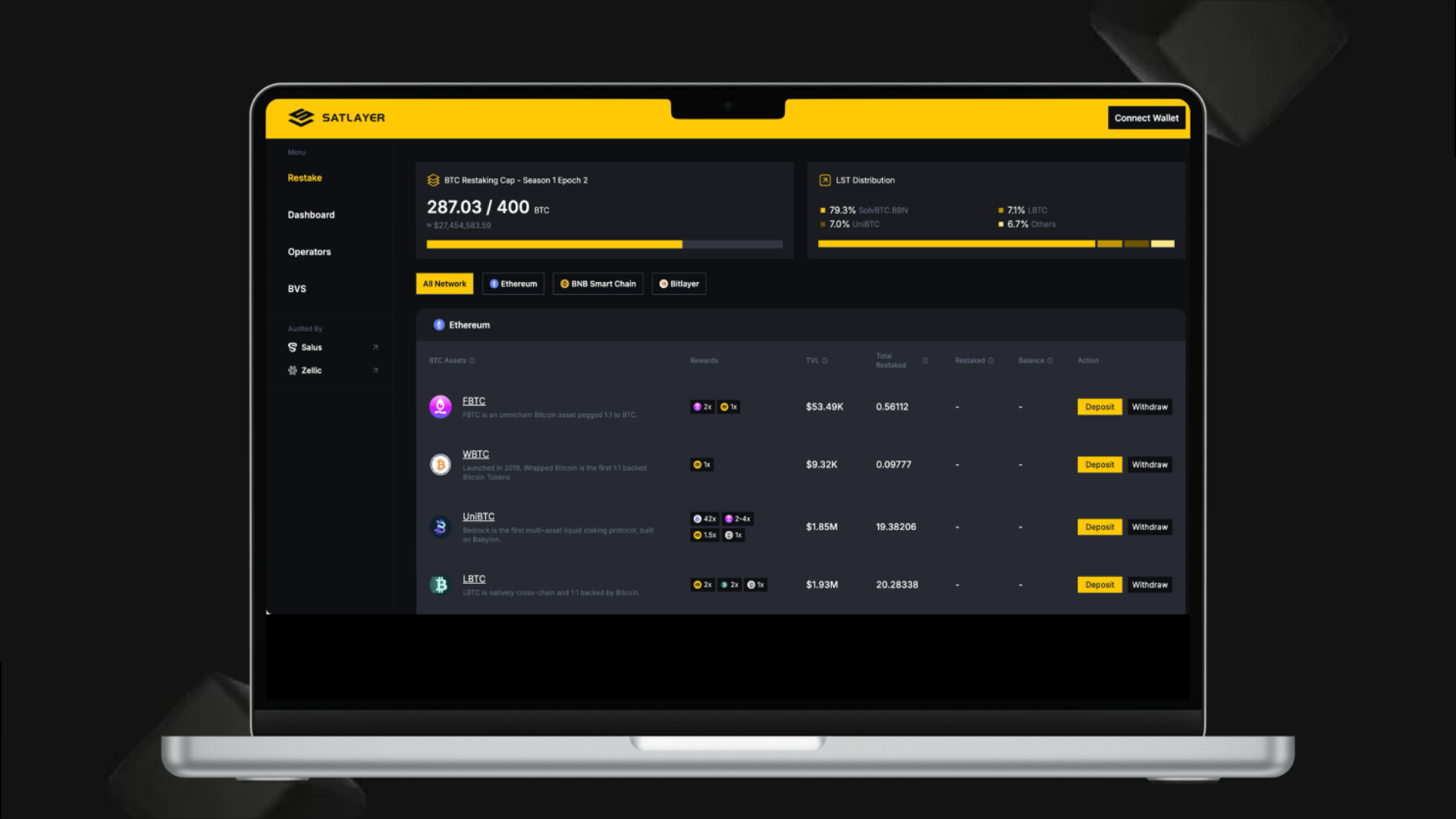
SatLayer is a cutting-edge Bitcoin restaking layer that rewards users for depositing and staking synthetic BTC assets across multiple networks, including Ethereum, Binance Smart Chain, and BitLayer. Designed to enhance Bitcoin’s integration into the broader DeFi ecosystem, SatLayer provides innovative incentives to grow and sustain its user base.
The Challenge
When SatLayer launched, connecting Bitcoin with DeFi remained an unsolved problem.The team needed to attract real users and liquidity across multiple networks, not just speculative deposits. Growth had to be fast, but also sustainable.They faced the question of how to engage users at scale while keeping incentives aligned with the protocol’s long-term goals.
The Solution
In September 2024, SatLayer launched its first onchain points program through Fuul, rewarding BTC deposits, restaking, and referrals. Every action was tracked transparently, linking user activity directly to protocol growth.
The program scaled rapidly, driving 12x growth in deposits and expanding SatLayer’s community across all supported networks.
Encouraged by these results, the team extended the framework to power its points-to-airdrop phase, converting accumulated user points into token allocations.
The airdrop launched at a $230 M FDV, validating SatLayer’s incentive model and proving that transparent, data-driven rewards could turn participation into ownership.
From there, SatLayer evolved into continuous post-airdrop seasons, each introducing new mechanics, boosts, and integrations that kept users active and aligned over time.
Conversion Events
SatLayer’s incentive program rewarded actions that directly supported ecosystem growth:
- Depositing BTC across Ethereum, Binance Smart Chain, BitLayer, Berachain, and Corn
- Restaking BTC positions to reinforce network liquidity
- Engaging through Twitter and Discord to expand community presence
- Referring new users to drive organic adoption
These conversion events created a clear loop between user actions and protocol growth, turning activity into measurable value.
Payout Rules
Rewards were structured to remain clear and adaptable:
- 2,100 points per BTC deposited per day
- 1,000 points each for verified Twitter and Discord engagement
- 10 % bonus from referred users’ earned points
- Seasonal boosts up to 3× across selected assets and networks
- Double multipliers for early participants
- Retroactive points distributions for new networks, ensuring fairness and transparency
- Periodic mini-campaigns creating short engagement bursts between seasons
This evolving design kept incentives relevant and competitive as the ecosystem grew.
Incentives Hub
SatLayer launched its Incentives Hub using Fuul’s no-code tools and later integrated it directly into its app.Users could track points, referrals, and ongoing seasons in real time, while the team managed continuous updates and new reward mechanics through Fuul’s backend.This setup provided agility at launch and full customization as the incentive system evolved.
Results
The points and referral program delivered strong results:
- 12x growth in BTC deposits
- $300 M+ TVL across supported networks
- $230 M FDV at token launch
- 40,000+ unique users
- 13x increase in transactions
SatLayer proved that a transparent incentive engine can generate measurable, long-term growth and liquidity across DeFi ecosystems.
"With Fuul, we launched our program in no time and kept refining it along the way. It was simple, fast, and gave us the flexibility we needed.” | Luke Xie, Co-Founder & CEO
Conclusion
SatLayer used Fuul’s infrastructure to design, launch, and scale its incentive system from a single points campaign into a long-term growth framework.
The program evolved continuously, from the first points season to post-airdrop expansions, adapting to new networks like BitLayer and Corn while maintaining transparency and user trust.
Fuul’s no-code setup allowed SatLayer to introduce retroactive points distributions, reward eligible users across new integrations, and refine its mechanics without halting live operations.
This flexibility proved that incentive systems can stay dynamic, fair, and scalable, meeting new demands as ecosystems expand.
Lending
Read how DeFi and Blockchain teams of all sizes
are exceeding expectations with Fuul